
Have you ever wondered what is chocolate made of and how chocolate is made? This step-by-step guide will explain the journey chocolate takes from the cacao tree to your home. It takes many steps to transform cacao beans into delicious chocolate and all of these steps are necessary for the production of quality chocolate. Chocolate is a beloved treat that we often take for granted and it is important to understand where cocoa comes from. I refer below to cacao and cocoa, so what is the difference between cacao and cocoa? Cacao refers to the raw unprocessed part of chocolate such as the tree and pod before the cacao beans are roasted, the cocoa refers to the roasted processed part of the chocolate.
How is chocolate made?
Chocolate comes from Cacao beans which grow on the Theobroma Cacao tree. The trees grow 20 degrees north and south of the equator and thrive in hot temperatures and rain. The tree bears a fruit known as the cacao pod and depending on the variety, can grow up to 10 inches long and contains up to 50 cacao beans
The cacao beans are ‘harvested’, ‘fermented’ and ‘dried’ at the cacao plantation. Once dried, they are then graded and packed for shipping to the chocolate factory or directly to the bean to bar artisan chocolate maker. The chocolate maker will then follow the process of ‘roasting’ the beans which is crucial to the flavour of the chocolate and will kill any bacteria, after roasting, the beans are ‘winnowed’ to separate the outer shell of the bean from the cacao nib which is the main ingredient for making chocolate. The cacao nib is then ‘grounded’ to a paste known as cocoa mass which is ‘conched’ further to produce a smooth mouthfeel once the additional ingredients have been added such as sugar, milk powder and vanilla. The cocoa mass is then ‘blended’ to make different types of chocolate such as dark, milk and white. Finally the chocolate is ‘tempered’ before being moulded into the chocolate shapes we know and love.
From the lush tropical climates of Central and South America to the modern factory, chocolate has come a long way. From its origin as the cacao bean to its final form as a delicious bar of chocolate, its journey is fascinating. This guide will take you through the entire process of transforming cacao beans into delicious chocolate!
How are cacao beans harvested?
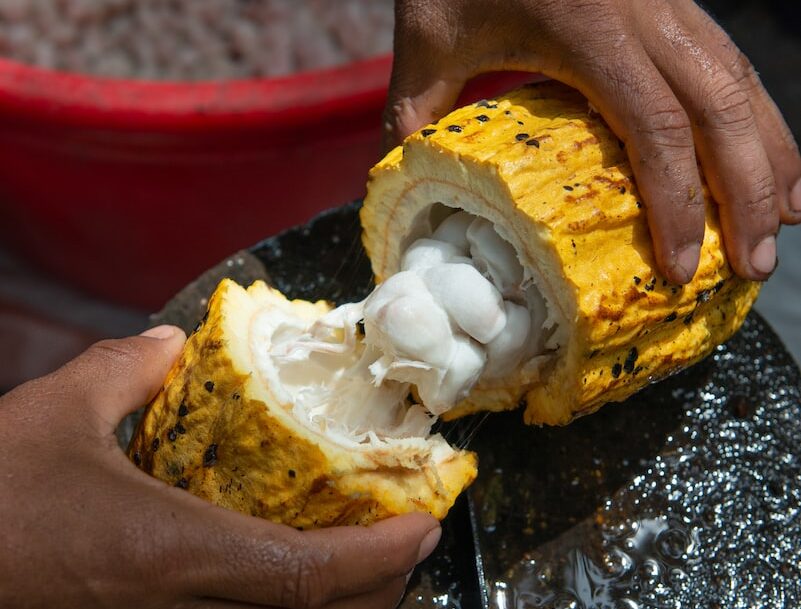
The harvesting of cacao pod and its beans is a delicate process that requires a lot of care. Before harvesting, the cacao trees must be treated with care so that the cacao pods do not break or crack. The pods are harvested when they are ripe and have turned orange. The pods are harvested by hand and brought to a fermentation shed to be opened. Freshly harvested cacao pods are covered in a white coating that is actually a bean-like substance called “pulp”. The pulp must be removed from the seeds, or “beans”, before they can be further processed into cocoa.
How are cacao beans fermented and dried?
The fermentation process is crucial to the production of good quality cocoa. During fermentation, the beans are laid out in the sun to dry. The harvested cacao beans can be spread out evenly or in a pile and then covered with banana leaves. They are turned every few days to ferment evenly. This warm and humid environment provides the optimum conditions for a natural fermentation process to take place. The pods are left in this environment for several days to allow the fermentation process to occur. This fermentation process breaks down the beans and increases the flavour, aroma, and colour of what we know as cocoa. In wetter climates, the beans are dried on fires which gives the beans a smokey flavour.
How are cacao beans transported over the world?
After fermentation and drying, the beans are bagged and shipped to the chocolate factory or to the bean to bar artisan chocolate maker. Traditionally shipped in strong jute bags, but due to the popularity and demand for chocolate, they are now more likely to be shipped in bulk directly into shipping containers.
How are cacao beans roasted and winnowed?
So how is chocolate is made in a factory? Once at the factory, the cacao bean is ready for the next step in the process. The roasting process is very important because it affects the flavour of the chocolate in a positive way. The beans may also be blended with other beans from around the world to capture flavours for the perfect blend, or they will remain as single origin chocolate. The temperature of the oven varies depending on the type of bean and the flavour required. Roasting is the process of turning the cacao beans into cocoa solids. Roasting also breaks down the protective layers on the bean’s shell and releases the cocoa solids from inside the shell. After roasting the outer shell separates from the cacao nibs inside and this is known as ‘winnowing’.
How are cacao nibs ground?
After the cacao beans are roasted and the cacao nibs separated, the cacao nibs are ground into a fine powder. The grinding of the cacao nibs causes the cacao nib to warm up and it produces ‘cocoa mass’. Cocoa Mass is a thick liquid that is rich in cocoa butter which is the natural fat found in cocoa beans, and cocoa solids . The desired grind depends on the type of chocolate to be made. The longer it is ground, the smoother it is.
How is cocoa mass conched?
Conching is the final step prior to tempering chocolate. Conching is a process in which ground cocoa mass is mixed and ground for a very long time with sugar, flavourings, and sometimes milk or other ingredients. The conching process is an important step in the production of chocolate because it increases the smoothness and flavour of the chocolate. The length of time that the mixture is mixed depends on how smooth the chocolate is desired. The chocolate we know and love will be mixed with ingredients at this point creating the basic blends, milk chocolate, dark chocolate and white chocolate.
How do you temper chocolate?
Tempering is an important process that is used in making quality chocolate. Tempering is a process of carefully bringing the temperature of the chocolate up and cooling it back down again to ensure the crystal structure of the chocolate is in its stable form. The tempering process is used to give the chocolate its desired glossy look and a firm texture. In order to achieve this effect, the chocolate must be carefully heated and cooled according to a certain schedule depending on the type of chocolate otherwise, if making chocolate with un-tempered chocolate, the chocolate will be dull with a soft texture,
Chocolate & Packaging
After tempering, the chocolate is poured into moulds, enrobed or hand rolled, and left to cool and harden. This is the last step in transforming cacao into chocolate as we know. The final product is then packaged and ready to be sold. To get the most out of your chocolate, it should be kept in a cool place and out of direct sunlight.
Conclusion – how are chocolates made?
Chocolate is a delicious treat, and now that you have learned about the fascinating process of transforming cacao beans into delicious chocolate, you will never look at your favourite treat the same way again. You will appreciate all of the effort and care that goes into making each bar of chocolate, and you may even be inspired to try making it yourself like I did! Enjoy!
Leave a Reply